MY BODY, THE BRIDGE: FINDING BELONGING AFTER DISPLACEMENT ~ Olga Naroditskaya
The mouse lay curled on its side in my husband’s shoe, eyes glassy and unmoving. Its tiny, motionless arms curled beside its slightly open mouth, a moment frozen in time. I squinted at the scene below me as I paused loading the washer, yesterday’s sweatshirt in hand. “Shit,” I think. Uncertain, I shake the shoe as my cat rubs up against my legs trying to get a better look at the action. My feet scramble into the first pair of shoes I find; my right hand opens the door to my backyard while my left holds the shoe. I took the mouse’s footwear coffin outside and poked it gently with a stick to confirm the findings. No response. Its tiny paws curled under its mouth, the posture reminiscent of the way I fall asleep at night, covers pulled up to my chin, arms by my face, relaxed yet protective. Time of death: unknown.
I have always had a love for the underdog. Whenever I watched Animal Planet, I would hold my breath, a silent prayer whispered to whoever could hear me, fingernails digging into my own palms as I watched a lone gazelle try to outrun a lion. I feel the gazelle’s fear, its trembling, the adrenaline, the grasping, grasping, grasping, every single time.
I could feel a lump in my throat, hot and dry and unyielding. When I was 10 years old, my father pulled the car containing my family over on the side of the road after visiting family friends one night, seeing a wounded fox in the darkness laying in the middle of the road. I remember my mom and dad making a makeshift stretcher out of a cardboard box to move the animal. Discussions were had about taking it to the emergency vet. I remember furrowed brows and hushed voices whispering in Russian, fears of the financial implications of helping the animal exhaled and inhaled between them, my sister and I huddled together, wide-eyed, in the backseat. The fears won out, a Russian solution of “this never happened” passed silently between my mom and dad, and the fox and all plans of rescue were abandoned without a second glance.
My parents, weary with defeat, tumbled back into the car, faces strained yet stoic. The car doors shut, the headlights illuminated the darkness once again, and we drove in silence. Nothing explained; no one comforted. I stared in the rearview mirror the whole way back.
When Jake came home, I showed him the tiny mouse in the shoe. After a brief moment of silence, he agreed to help me bury our unexpected guest. I carried the shoe into our backyard and picked out a spot several feet away from a handsome oak tree, between the fence we share with our neighbors and our deck overlooking the forest beyond our property.
I was wearing an oversized T-shirt and Ugg boots, my hair still wet from the shower, shining in the setting sun. I got a spade from our garage and dug a shallow hole, just under a foot deep. I stopped digging when the hole felt complete, and then struggled to shake the mouse out of the shoe without touching it.
Jake took the shoe to help, and the body fell onto the dirt after a fervent effort. We both looked down at the makeshift grave without saying a word, the moment calling for something neither of us could find language for. “Wait,” I said, holding up a finger, and sprinting out the gate to the front yard. I paused by the patch of wildflowers by our front door, watching the too-fat bumblebees with wings comically small for their bodies crawl from flower to flower in search of pollen, filled with the inevitability of desire. I carefully chose two wildflowers, pinching the stem of one until it released in my hand, then the other. I returned with the flowers a minute later and gently laid them in the grave with the mouse.
I remember saying a few words in memoriam, but my words floated beneath the horizon with the setting sun, drifting into our ears for only a moment and then disappearing into the breeze. I made a joke that I don’t remember. My chest was tight and my fingers numb as we poured handfuls of dirt to cover the open grave, my body buzzing with something unnamed and insistent. This burial; a way to rewrite the past. To turn the car around, to cradle the fox’s body in my arms. To not allow it to die alone. We walked back to the house silently, climbing the wooden steps up to the backyard deck, heavy-limbed and heads slightly bowed, hands grazing each other but not quite touching.
My sister and I once owned a pair of parakeets, one green and one blue, a boy and girl pair that lived with us in a townhome in Aurora, Colorado. When I was 11 years old, I came home to find both of them lying facedown in their cage, motionless. A sharp inhale; a prickle behind my eyelids. I had the burning desire to bury them both, a personal mission propelling me forward. I had to face what the adults around me couldn’t seem to.
I searched the house until I found a small box to put each parakeet into, and enlisted the help of my best friend from next door to help me bury them to the right of our row of townhouses, beneath an old tree right off the path leading into the neighborhood park. We dug the graves with our hands, hunched over the tiny holes, working silently. Later that afternoon I saw boys from the neighborhood digging up the birds that I laid to rest. When I asked them why, they couldn’t give me an answer.
Back then, I never understood my own lack of belonging, didn’t understand why the other kids didn’t cry when animals got hurt. Why they felt no responsibility to ease suffering, why they didn’t seem to care if they were the ones creating it. It seemed like all the unfairness of the world reached a fever pitch that only I could hear, a high-pitched wail that rattled my teeth and kept me awake at night, heart pounding in the darkness. I remember the backs of the heads of the boys that dug up our birds, their gait light and bouncy, almost skipping. Their shoulders slack, carefree. I watched them walk away, my own hands clenched and eyes burning.
The land and the animals offered me a peace that other people did not. I think of the raspberry bushes of my childhood, taller than my head, engulfing me as I popped sun-kissed berries into my mouth on my grandparents farm in Rzhevka, Russia. I remember climbing the tall tree in our front yard in Aurora, fingertips reaching, stretching, taking me as high as I could go. I think of picking up a live mouse that our family cat brought us as a token of her affection; my mom and sister screamed for me from atop the kitchen table where they huddled, waiting for me to scoop it up and escort it back outside. Now, barefoot, I take slow steps across the reddish brown dirt in Jake and I’s front yard in North Carolina, crouching to steady myself. To connect. To root down. To remind myself: I am here. I am here. I am here.
Displacement wasn’t a word I would have thought of when I was younger, but I think of it now. When I was in grade school, I was “the Russian kid,” the one whose name the teachers struggled to pronounce as I sat in my chair squirming, trying to make myself as small as possible. I saw myself reflected in the villain of every action movie, the exaggerated slavic accent that kids found endlessly hilarious, their faces contorting as they struggled to maintain their composure while gleefully yelling, “Mathaaaarrrrr Russssiaaa.” My otherness was unavoidable and claustrophobic, a constant running into furniture, all sharp edges and bleeding wounds I could not yet name as I tried to walk through a dark room.
When I was a teen and I felt that familiar chest-too-tight, heart beating double time, whole body buzzing that I had become familiar with, I would run away and make myself a home on the steps of office buildings, cutting through the backyard in the dark and half-running to my final destination. I would sing to myself while my legs ran from all the things they didn’t yet understand—the lack of belonging to a home, the perfect American family I watched on TV with hungry eyes, a warmth that just felt out of reach.
I would often perch and journal on the familiar steps to an office building that was within running distance, but sometimes I just sat there waiting for my breathing to return to normal, counting heartbeats and looking out at the traffic on the road from my hiding spot. An hour would go by, sometimes more. Then I slowly made my way home. I don’t remember anyone ever asking me where I was.
Later on after I moved out of my parents’ house, I graduated to neighborhood parks and abandoned rooftops, seeking out hidden neighborhood spots outside underneath the cloak of darkness. The moon and the stars provided a necessary hiding place, a space I could exist without the constant reminder of difference.
I was a wandering thing, floating outside whenever I couldn’t sleep and the room got too small to hold me, which was almost nightly. I couldn’t breathe in there. My skin felt itchy, and my whole body so hot I wanted to unzip my skin and walk around alone, unnoticed, melting into the land, the trees, the earth. I wanted to join the parakeets, but I didn’t want anyone to dig me up afterwards.
I survived that time, though not unscathed. I graduated college by the skin of my teeth. Started graduate school. Went to London and walked unfamiliar roads at 2am, trying to learn all the secret hiding spots and scars of a new country that felt familiar and new at the same time. Traveled from coast to coast, chasing something intangible. Worked on farms taming brambles, weeding gardens, shoveling goat manure from barns, blisters forming on my already callused hands, a protective barrier born from weeks of manual labor. I walked the cliffs of Cornwall, eating blackberries from bushes that lined the winding country road. I never had any trouble sleeping there. I didn’t know it then, but it was a temporary peace.
When I came back, the walls closed in on me again. I moved to the grey cornfield-studded monotony of the midwest, with only the belongings that could fit inside my car for company. The prospect of a new life thrilled me; I didn’t want the old one anymore. I met my husband, worked a job I hated for a year, and then we packed up and moved across the country to North Carolina.
When we bought our house, I was excited. We’d spent the entire first year of the pandemic in an apartment sandwiched between upstairs neighbors that inexplicably did burpees at the crack of 7am, whose potted plant soil inevitably made its way down to the swing that was on our balcony, staining the blue fabric. Our downstairs neighbors, two college boys who, drunk on their youthful immortality, played beer pong with friends in the middle of lockdown, the bass from their favorite songs vibrating through our floor into the late hours. This house was a new beginning, a place to spread out, and to exist unconstricted.
But it was also crouch-walking into the crawl space with flashlights to fix the malfunctioning HVAC unit and cementing new fence posts into the dirt, sweat licking the outlines of our faces in an unforgiving heat. It was the endless list of multiplying tasks that ensnared themselves around my daily routine like a weed, choking the life out of the plants around it. I started lying awake at night again, counting all the lives I had lived in the rays of moonlight. For the next year, I teetered on the brink of feeling grounded by the responsibility of homeownership and wanting to run away in the dead of night, hearing only the sounds of my bare feet on the pavement and the uneven rhythm of my jagged breathing.
This house, it turns out, couldn’t contain me either. My racing thoughts, the familiar intimacy of aloneness, my legs itching to kick down the walls that always seem to suffocate me. These are the load-bearing structures of my experience, the elements that follow me wherever I go, trailing behind me from continent to continent like a familiar shadow.
Over time that experience softened. I learned to see with different eyes. I let the land tell me what it needed, and sometimes what I needed too. I learned to look at the tangle of flowers in the front yard, sprinkled with weeds and dead things, and to see something other than a confirmation of my own failures. I saw natural cycles that change with the seasons. Some required my intervention, and others did not. I learned how to lengthen my exhales, to slow my breathing. The land taught me about relationship—holding me, steadying me—as I started writing down echoes of the past. The land always helped me to return to the crunching of leaves beneath my feet, the smell of wet earth after a rain, the squirrels dancing across tree branches, taking regular leaps into the unknown.
I write these words outside a coffee shop, firmly planted 30 minutes from my North Carolina home, sun beaming down relentlessly on my arms, a couple speaking Spanish at the table behind me. I stop and listen to them talk for a while. The words “todo el mundo,” “quien,” and “azura” float their way to me on the gentle breeze as I watch a spiderweb sway and stretch lazily between two trees. Trembling. A bee lands lazily on a nearby bush, and a restless fly becomes interested in the remains of my half-eaten cinnamon roll, discarded atop a napkin on the iron table, glaze shiny and translucent in the sun. My face is sweating beneath my sunglasses, but I don’t move. I feel warm.
Belonging, for me, has evolved as a living document, mapping some intangible felt sense inside me like a compass. When I was younger, I belonged to Russia, to the raspberry bushes of my childhood. To my grandparents farm, the goats chewing lazily on the foliage, the smell of new earth in the air. I belonged to my grandmother making Vareniki with cherries in the outdoor kitchen, humming to herself absentmindedly, knowing that they were my favorite. Slowly, that compass pointed in a different direction. I sit here, contemplating. I belong to both places and yet neither one at the same time. There is no resolution to be had: I have one foot stateside and one on the other side of the world. There is an ocean between me, between footsteps. I’m not willing to close the gap.
Displacement always fractures, leaving in its place a sharpness on the exhale, the severing of a million potential futures, a perpetual longing for home while dizzy with the disorientation of not knowing where to look for it. I’m not the only one who’s felt displacement—the land where I live bears witness to that. The oak trees predate me and will continue to outlive me. My house exists on land that belonged to the Saponi, Occaneechi, and Catawba tribes. The land holds the story of their displacement as well as their pain, our scars the same shape even if they are not the same size.
I wonder where they have gone to seek healing, these caretakers of the land that were here before me. I wonder if they stare up at the same sky and exhale in sync with me. I wonder if they touch the leaves on the oak trees to ground themselves like I do. I wonder what they could teach me about navigating, overcoming, stumbling through the wilderness of their own grief.
When the war in Ukraine started in 2022, I felt like all the wind was knocked out of me. I struggled to breathe. My grandmother was born there, walking the streets of Kharkov in her youth, and marrying my grandfather, a young Russian factory worker who threw rocks at her to show his affection when she was a young woman. That was the land they belonged to, and now that land knows occupation: Bombs exploding in the night. Piles of rubble where there were homes. Bodies laying in the street, eyes glassy and unmoving, no one to bury them beneath an oak tree with flowers lining their grave. Tanks crawling their way ominously down streets where sunflowers used to bloom, consuming everything in their path. My cousin and aunt hiding in a basement on the border while Russian war planes fly overhead.
I sit in the living room of my new house and feel the aching loss, hands numb and heart racing, watching YouTube videos of bombs exploding in a land my family once belonged to. It feels real and doesn’t at the same time. I wander the house in a daze, dizzy with the gravity of it. Open the fridge and then close it again. Put on my Ugg boots and walk outside. I rake the leaves into a mound, then disappear into the forest on the other side of our property. After a pregnant pause, I reappear dragging a fallen tree limb, dropping it onto the ground with a soft thud at the edge of the fire pit. The earth holds me again, creating a container for my grief, my rage, my exhaustion.
I begin dismantling the tree limb, manually removing the twigs by hand and using a chainsaw to cut the rest of it into firewood. Hands still reverberating with the vibration, I throw some logs into the fire pit, topping them with the smaller sticks and twigs. I take a huge armful of leaves and place it on top of the burn pile, lighting the contents. Then I stand back and watch the flames lick up the sides, tentative at first but quickly engulfing the hastily stacked pyramid and stretching up into the endless sky.
I stop and take a sip from my water bottle, looking out over the landscape. This unmown yard is unchanged, still wild with weeds, dotted with almost a dozen oak trees, the top branches brushing the clouds. This yard is not lined with tanks, sunflowers crushed in the unrelenting advance of military vehicles. There are no police boots digging into the backs of men, crumpled on all fours, sidewalks splashed with crimson. There are no cities decimated by the colonial hunger of men in suits with empty stomachs and vacant eyes.
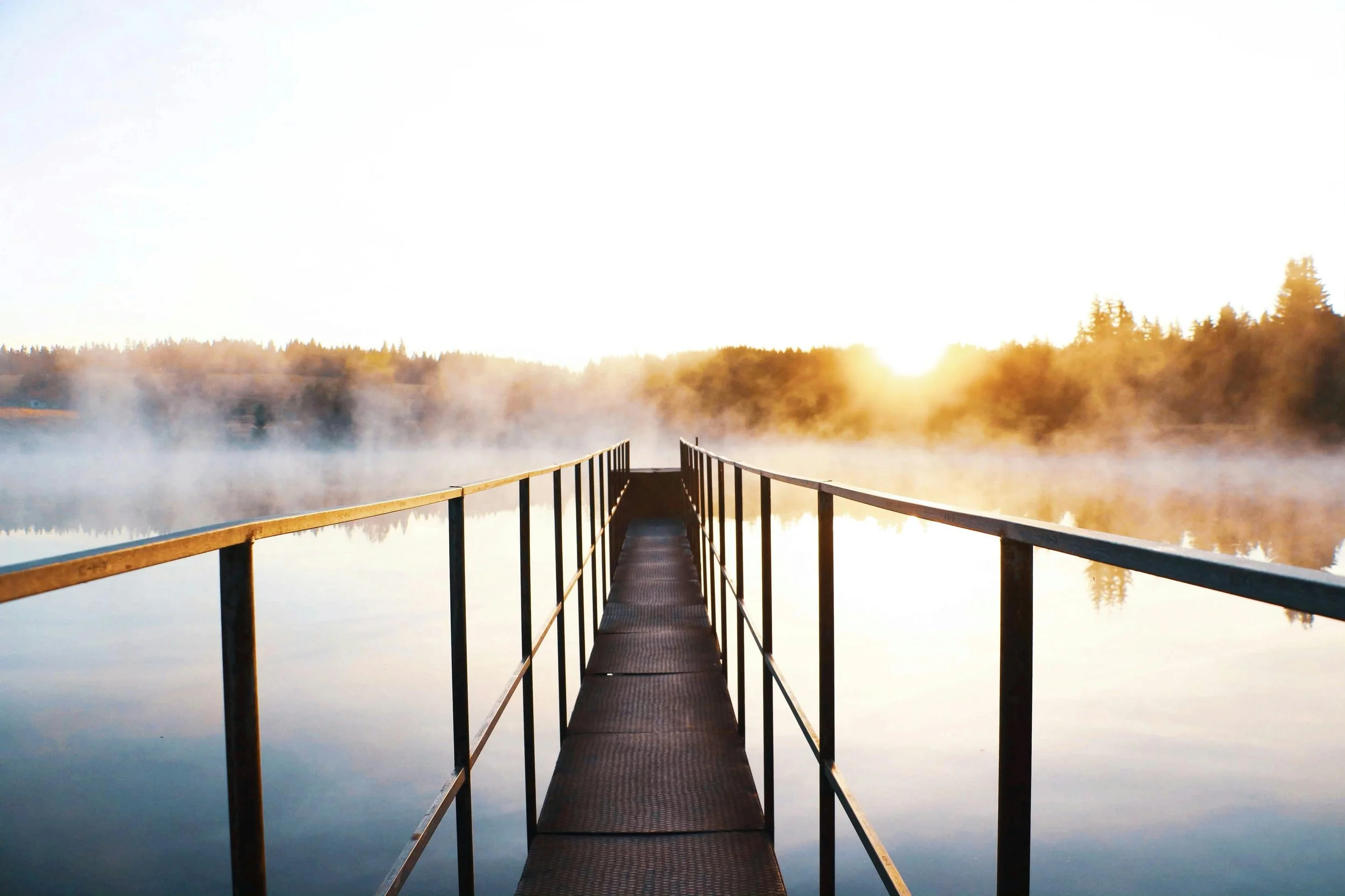
My stance is as wide as ever; one foot here, and one foot there. The suffering stretches across countries. My body, the bridge.
I take a seat, watching the burning leaf pile for a while, the ache in my chest fighting for my attention. But I’m here. With the forest behind me, the ground littered with acorns and dry leaves from the previous fall. My boots pressed into the reddish clay dirt, soft from the recent rain. The oaks standing tall, guarding the perimeter. The land, I think, outlasts all of us. It outlasts birth and death, the rise and fall of empire, and the feeble human attempts at containing, at controlling it. The earth resists colonization. What no longer serves new growth gets composted. Floods sweep away entire houses, no matter how sturdy the foundation. Fires end life and then enrich the soil for new growth.
I take my pain and offer it up to the forest, touch the ground beneath me, feeling the dirt on my fingers and exhaling slowly. I close my eyes and breathe in deep, letting the wind blow me in the direction I need to go. Then I stand up from my low crouch, toss another pile of leaves into the fire, and watch it burn.
Olga Naroditskaya is a writer, therapist, and private practice owner in North Carolina. She lives in Willow Spring with her husband and her four cats, on land that originally belonged to the Saponi, Occaneechi, and Catawba tribes.
